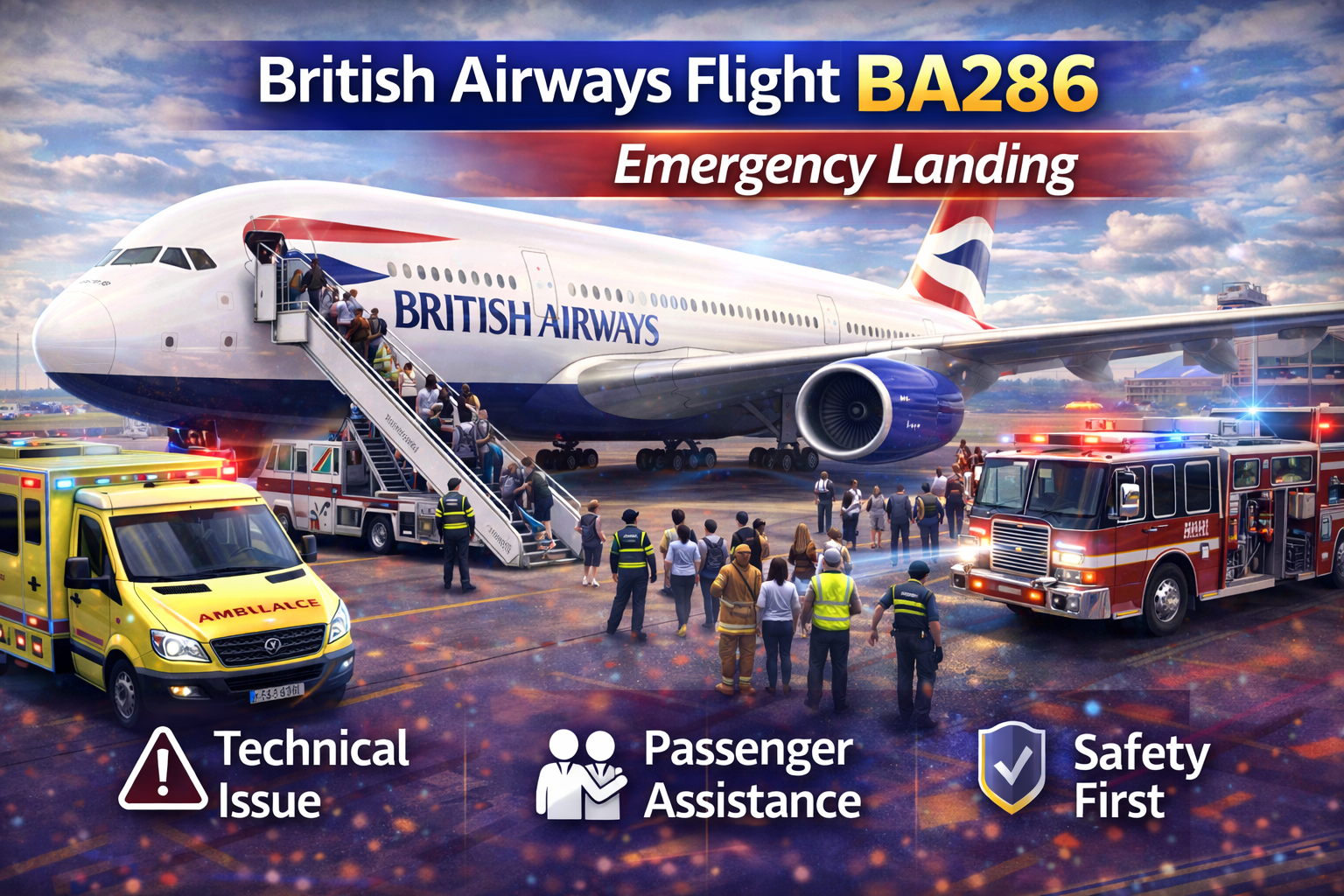
British Airways Flight BA286 Emergency: A Story of Safety, Skill & Reassurance
Imagine you are cozy in your seat, cruising high above the Atlantic Ocean. The cabin is quiet. Then, an announcement changes everything. For passengers on British Airways Flight BA286, this became a reality on May 27, 2025. A serious medical emergency turned a routine flight into a race for care. But what happened next is a powerful story of calm, training, and a hidden safety net that works perfectly. This is not a story of fear. It is a story of profound reassurance. It shows what happens when hundreds of hours of training meet cutting-edge technology. Every passenger landed safely that day, thanks to a system designed for the unexpected. Let’s walk through the journey of British Airways emergency flight BA286 and discover why it reminds us that flying is incredibly safe.
A Timeline of the British Airways Emergency Flight BA286
To understand the swift response, it helps to see how events unfolded that night. The situation was managed with incredible precision from the first sign of trouble to the moment the wheels touched down.
The flight, an Airbus A380, had departed San Francisco as scheduled on the evening of May 26, 2025. For hours, all was normal as the giant aircraft crossed over the United States and Canada. The crisis began when the plane was cruising at 41,000 feet over the North Atlantic Ocean, not far from Scotland. A passenger needed urgent medical help. The cabin crew, trained for this exact moment, sprang into action. Meanwhile, in the cockpit, the pilots made a critical decision. They declared a formal emergency by setting their transponder to “Squawk 7700”. This single code alerted air traffic controllers across the ocean that British Airways flight BA286 needed priority. The decision was made to continue to London Heathrow, which had world-class medical facilities ready. The plane landed smoothly on Heathrow’s runway 27L at 13:39 BST, concluding a tense but expertly managed chapter.
The Crucial “Squawk 7700”: What It Really Means
You may have heard the term “Squawk 7700” in movies or news reports. But what does it actually do? It is the aviation world’s universal signal for “I need help.” When the pilots of the British Airways emergency flight set this code, it was like turning on a flashing beacon for every air traffic controller watching their screens.
This code does not explain the problem. It just signals that an aircraft requires immediate attention and priority handling. For British Airways flight BA286, it meant controllers could quickly clear other planes from its path. They gave the flight a direct, uninterrupted route to London. On the ground at Heathrow, the code triggered a silent alarm. Emergency services, including fire crews and ambulances, were put on standby. This is a standard, precautionary measure. Seeing these vehicles lined up on the runway can be alarming for passengers, but it is a sign of a system working exactly as it should. It ensures help is literally seconds away, providing the highest level of safety for everyone on board.
The Heart of the Response: Unshakeable Crew Training
Behind every safe landing is a crew prepared for anything. The calm response on British Airways emergency flight BA286 was no accident. It was the result of relentless, mandatory training called Safety and Emergency Procedures (SEP). British Airways cabin crew and pilots train for hundreds of hours in realistic simulators. They practice for medical crises, fires, evacuations, and more. This training turns panic into procedure.
On that flight, this training came to life. The cabin crew immediately began administering medical aid. They used onboard equipment like oxygen and first aid kits to stabilize the passenger. At the same time, they worked to keep the cabin calm and orderly for everyone else. Their clear communication and professional demeanor were vital. In the cockpit, the pilots were not alone. They used a satellite link to connect with doctors on the ground. These medical experts provided real-time advice, helping the captain make the best decision for the patient’s care. This seamless teamwork between the air and the ground is a modern miracle of aviation.
Passenger Experience: Anxiety Met with Reassurance
For the travelers on board, the experience was undoubtedly frightening. The atmosphere in the cabin shifts when an emergency is declared. There is a sudden silence, followed by worried whispers. On British Airways flight BA286, passengers saw the crew shift gears with quiet urgency. They witnessed the dedicated care being given to a fellow traveler.
Many passengers later shared feelings of anxiety mixed with profound gratitude. They spoke of the crew’s kindness and clarity. In situations like this, following crew instructions is the most important thing a passenger can do. Simple acts, like staying in your seat with your seatbelt fastened unless instructed otherwise, make the crew’s job easier and keep everyone safe. The UK Civil Aviation Authority recommends keeping your seatbelt fastened whenever you are seated, as a precaution. The experience on this flight shows that even in worry, a well-trained crew can provide a powerful sense of security and order.
Behind the Scenes: Heathrow’s Emergency Machine
When an aircraft like the British Airways emergency flight is coming in, the airport itself transforms into a well-oiled emergency machine. Heathrow, one of the world’s busiest airports, has protocols for this exact scenario. The moment the Squawk 7700 was received, airport operations centers activated their plans.
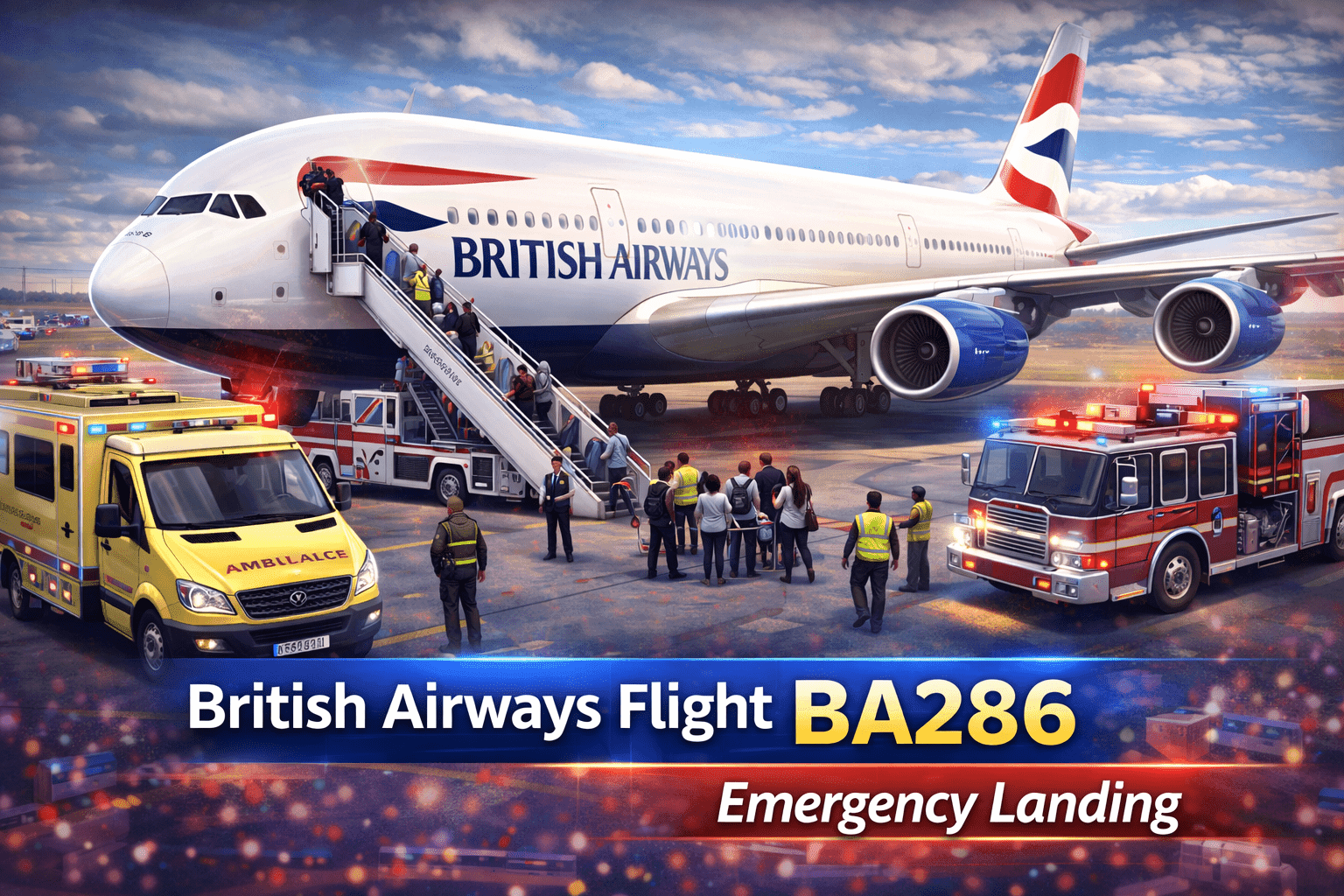
Fire engines, ambulances, and specialist vehicles took their pre-planned positions. Air traffic controllers dedicated a runway and cleared the airspace. Teams on the ground were prepared for any outcome, even though the pilots reported they were handling the situation. After British Airways flight BA286 landed and taxied to its gate, a thorough inspection took place. This is standard practice to ensure the aircraft is perfectly safe for its next journey. This entire operation, which passengers rarely see, is a testament to the layered safety net that protects every flight.
Key Facts at a Glance: British Airways Flight BA286
| Aspect | Detail |
|---|---|
| Flight Number | BA286 |
| Date of Incident | May 27, 2025 |
| Aircraft Type | Airbus A380-800 (Registration: G-XLEG) |
| Route | San Francisco (SFO) to London Heathrow (LHR) |
| Nature of Emergency | Serious Passenger Medical Emergency |
| Emergency Action Taken | Declaration of General Emergency (Squawk 7700) |
| Key Decision | To continue to destination after medical consultation |
| Landing Airport | London Heathrow (Runway 27L) |
| Outcome | Safe landing; passenger received medical care |
Why Airlines Sometimes Continue Flying
A big question from this event is: why did the plane continue flying for hours to London instead of landing immediately? This decision, made by the captain after consulting doctors, was actually the safest choice. First, the cabin crew had successfully stabilized the patient using onboard medical resources. Second, London Heathrow had a specific medical team waiting, ready to provide advanced care the moment the plane arrived.
Diverting to a closer, smaller airport can sometimes cause more risk and delay. The plane might have to burn fuel to land lighter, and the local hospital may not have the needed specialists. By continuing to the planned destination, the captain ensured the passenger would get the best possible care without the added stress of an unplanned landing for 400 other people. This “continue or divert” calculation is a key part of a pilot’s training, always putting health and safety first.
Your Safety in the Sky: What This Incident Teaches Us
The story of British Airways emergency flight BA286 is a masterclass in aviation safety. It teaches us that safety is not luck. It is the result of preparation, technology, and human skill. Every part of the system, from the crew’s first aid training to the satellite phone connecting them to doctors, is designed for backup.
For us as passengers, it reinforces simple but vital habits. Always pay attention to the safety briefing at the start of your flight. Take a moment to find your nearest exit, which could be behind you. Most importantly, trust the crew. If an emergency happens, their instructions are your guide to safety. They are trained to help you, just as they helped every person on British Airways flight BA286. Knowing this system exists should make every traveler feel more confident.
The Ripple Effect: How One Flight Makes All Flights Safer
You might wonder, what happens after an event like this? The learning never stops. Aviation authorities, like the UK’s Air Accidents Investigation Branch, study every incident. They are not looking to blame anyone. They want to understand how to make the system even stronger. Their findings are shared with airlines worldwide.
A lesson from one airline can become a new safety rule for all. Maybe a piece of medical equipment can be improved. Perhaps a communication procedure can be tweaked. This relentless pursuit of improvement is why flying is one of the safest ways to travel. The successful handling of the British Airways emergency flight provides real-world data that makes future responses even smoother. It is a system that learns from every event to protect every passenger.
Looking Forward: The Future of In-Flight Safety
The aviation industry is always reaching for the next level of safety. Today, technology is moving toward “predictive” systems. These smart systems can analyze data from an aircraft’s engines and parts to predict a possible issue before it happens. This could allow engineers to fix things on the ground, preventing emergencies in the air.
However, human elements like medical events will always be possible. That is why the human skills demonstrated on British Airways flight BA286 will remain irreplaceable. The future will blend better predictive technology with even more advanced crew training. The goal is simple: to make an already safe mode of travel even more secure and reliable for every single person who flies.
Frequently Asked Questions (FAQ)
No. Thanks to the swift actions of the cabin crew and the decision to continue to London, where advanced medical care was waiting, the affected passenger received the help they needed. The aircraft landed safely, and no injuries were reported from the emergency itself.
“Squawk 7700” is a special code pilots enter into their transponder. It is an international signal to air traffic control that the aircraft is experiencing a general emergency and requires priority handling and assistance. It immediately alerts controllers to clear the plane’s path.
After stabilizing the patient and consulting with ground-based medical doctors via satellite, the captain determined the safest option was to continue to London Heathrow. This ensured the passenger would have immediate access to top-tier medical facilities specifically prepared for their arrival, which might not have been available at a closer diversion airport.
Commercial aircraft like the British Airways A380 carry extensive emergency medical kits. These include Automated External Defibrillators (AEDs), emergency oxygen supplies, advanced first-aid materials, and various medications. Cabin crew are trained to use all of this equipment.
Typically, no. Events like a serious medical emergency are classified as “extraordinary circumstances” that are outside the airline’s control. While the airline is responsible for providing care (like meals or hotels if needed), financial compensation for the delay is not required under regulations like UK Regulation 261.
The most important thing is to listen carefully to and follow the instructions of the cabin crew without delay. They are extensively trained for these situations. Ensure your seatbelt is fastened if you are seated, and do not attempt to retrieve cabin baggage during an evacuation, as this blocks exits and endangers others.
Final Thoughts: Confidence from a Story of Care
The journey of British Airways emergency flight BA286 is ultimately a positive one. It is a real-world demonstration of the invisible safety net that surrounds every flight you take. It shows dedicated professionals—from the flight attendants to the pilots to the ground controllers—working in perfect harmony. They turned a potential tragedy into a story of successful care and safe passage. So, the next time you fasten your seatbelt and hear the engines roar, remember this story. Remember the thousands of hours of training, the advanced technology, and the layers of backup plans. You are not just a passenger. You are at the center of the safest and most reliable transport system ever built. The story of British Airways flight BA286 should not make you nervous about flying. It should give you great confidence every time you take to the skies.