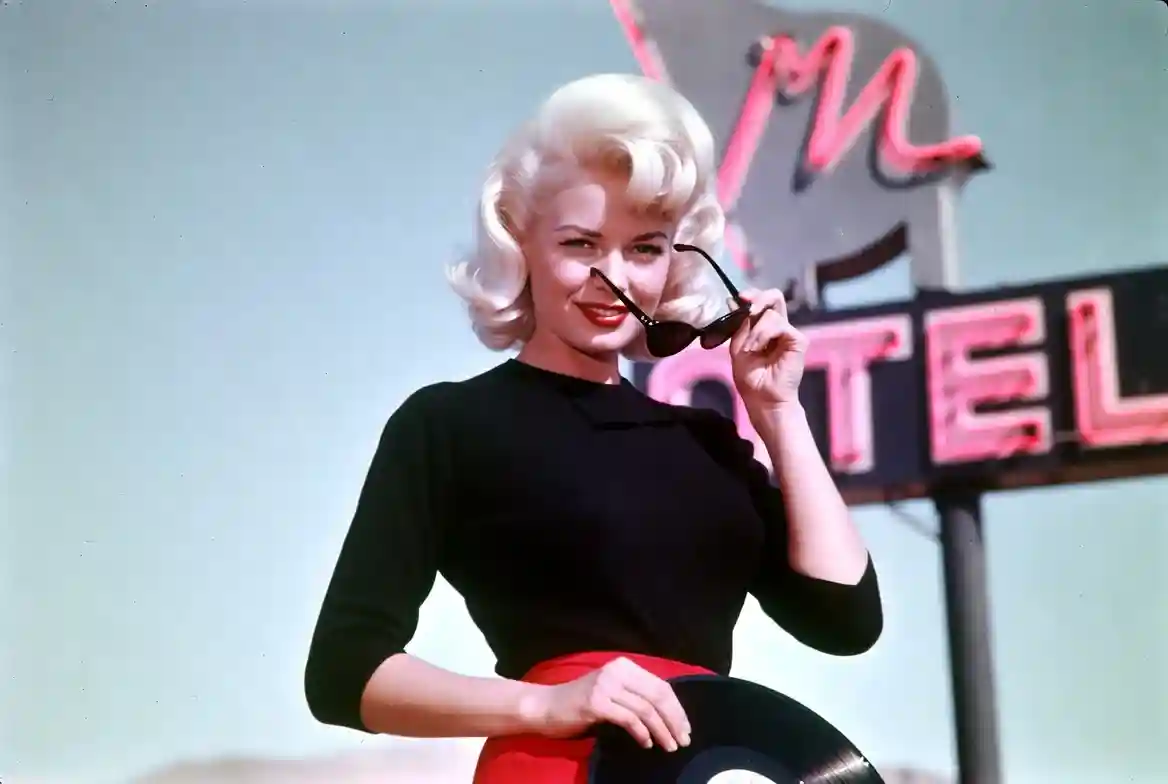
Mamie Van Doren: The Untamed Blonde Bombshell Who Defined 1950s Glamour
Forget the oversimplified comparisons. Mamie Van Doren shattered the mold of a typical 1950s sex symbol through raw talent, rockabilly rhythms, and an unapologetic attitude. She refused to fade away. Dive into the life of a woman who transformed Hollywood glamour into a personal brand of fearless independence.
The Early Life of Mamie Van Doren: From Rowena to Stardom
On February 6, 1931, in Rowena, South Dakota, Mamie Van Doren was born as Joan Lucille Olander. Her family soon relocated to Los Angeles, a move that placed her right at the doorstep of the movie industry. A teenage beauty queen victory opened doors, and she caught the eye of film producer Howard Hughes.
Hughes saw a magnetic presence that could compete with the biggest names on the silver screen. He signed her to an RKO Pictures contract and famously renamed her “Mamie Van Doren” after a character in a story he admired. She instantly became part of a glamorous trio of blonde stars that studios pushed heavily in the mid-1950s.
Quick Facts about Mamie Van Doren’s Origins:
- Birth name: Joan Lucille Olander
- Birthdate: February 6, 1931
- Birthplace: Rowena, South Dakota
- Move to Hollywood: Early teens
- Mentor: Howard Hughes
Mamie Van Doren’s Breakthrough in Hollywood
After inking her RKO deal, Mamie Van Doren quickly moved from bit parts to leading roles. Her film debut in Forbidden Area (1956) placed her alongside Charlton Heston, but it was her fearless on-screen energy that got producers talking. She never played the damsel in distress. Instead, she crafted characters that were bold, street-smart, and unafraid to challenge the status quo.
Her contract at Universal-International gave her a string of starring vehicles that showcased her comic timing and dramatic flair. The studio marketed her as the “bad girl” alternative to the more polished blonde stars. Fans loved her rebellious image, and her fan mail grew by the thousands each week. This period cemented Mamie Van Doren as a bankable leading lady whose appeal went far beyond her looks.
Mamie Van Doren’s Most Iconic Films
Moviegoers remember Mamie Van Doren for a run of cult classics that mixed rock ‘n’ roll, juvenile delinquency, and sharp humor. Below is a detailing table of her essential films.
| Film Title | Year | Role | Notable Fact |
| Untamed Youth | 1957 | Penny Lowe | First major lead; featured rockabilly performances |
| Teacher’s Pet | 1958 | Peggy DeFore | Starred opposite Clark Gable and Doris Day |
| High School Confidential! | 1958 | Joan Staples | Cult classic with real-life jazz and rock acts |
| The Girl in Black Stockings | 1957 | Harriet Ames | Murder mystery set in a desert motel |
| The Beat Generation | 1959 | Francee Culloran | Examined the beatnik subculture |
| Vice Raid | 1959 | Carol Hudson | Gritty crime drama; Van Doren as a model framed by a mobster |
| Sex Kittens Go to College | 1960 | Dr. Mathilda West | Comedy featuring a genius scientist with a bombshell persona |
These movies turned Mamie Van Doren into a midnight-movie favorite. Her lines crackled with sass, and she performed her own rock numbers in several productions, something few actresses of that era attempted. Her willingness to poke fun at her own image gave the films an ageless camp value that still hooks new viewers.
The Rockabilly Rebel: Mamie Van Doren’s Music Career
While many Hollywood blondes merely lip-synced on screen, Mamie Van Doren carved out a legitimate music career. She recorded rockabilly and early rock ‘n’ roll singles that became collector’s items. Her voice carried a raw, smoky edge that perfectly matched the rebellious energy of the late 1950s.
Notable Mamie Van Doren Recordings:
- “Ooh Ba La Baby” – A rhythmic rockabilly stomper
- “The Beat Generation” – Tied to her film of the same name
- “Separate the Men from the Boys” – Bluesy, defiant anthem
- “Go, Go, Calypso!” – Upbeat tropical rock fusion
She performed her tracks live on television variety shows, proving she didn’t need studio trickery. Nightclubs across the country booked her for singing engagements, and her sets often blended jazz standards with original tunes. Her music remains a favorite among rockabilly revivalists and is frequently reissued on vintage compilations.
Mamie Van Doren vs. Marilyn Monroe and Jayne Mansfield: The Blonde Trinity
Hollywood in the 1950s loved grouping its blonde stars into a tantalizing trio. Mamie Van Doren found herself constantly compared to Marilyn Monroe and Jayne Mansfield. The media painted them as rivals, but Van Doren always insisted the real competition was manufactured by publicists.
What set Mamie Van Doren apart? She leaned into a tough, wisecracking persona that contrasted with Monroe’s vulnerable charm and Mansfield’s bubbly exuberance. Her on-screen characters often outsmarted the men around them, and her off-screen life reflected genuine independence. She openly rejected the victim narrative that followed many starlets, choosing instead to control her own career moves. This self-possession earned her a loyal audience that respected her as more than a pin-up.
Nightclub Performer and Stage Presence
Mamie Van Doren held court in some of the most famous nightclubs across the United States and Europe. Her live act blended sultry vocals, sharp comedic banter, and an ability to read the room that came from years of hard touring. Audiences saw a seasoned entertainer who gave everything on stage.
Her residency gigs extended well beyond the 1960s, proving her staying power in a business that often discarded actresses after a few short years. She appeared in Las Vegas showrooms, New York supper clubs, and international venues, always keeping her setlist fresh. She once quipped that a live audience will tell you the truth in five seconds—and she never gave them a reason to stop applauding.
Mamie Van Doren’s Autobiography and Writing
In 1987, Mamie Van Doren released her memoir, Playing the Field, a candid, no-holds-barred account of her life. The book offered an unfiltered look at her relationships, the studio system, and her determination to live on her own terms. It became a must-read for classic film fans and remains one of the most honest Hollywood autobiographies ever published.
You can find her firsthand accounts of dating famous leading men, turning down roles that compromised her values, and navigating a male-dominated industry. She didn’t shy away from naming names or admitting mistakes. That honesty builds deep trust with readers, reinforcing her reputation as someone who never hid behind a manufactured image. Her official website continues to offer signed copies and personal updates directly to fans.
Personal Life, Marriages, and Relationships
Mamie Van Doren’s romantic history reads like a Hollywood legend. She married five times, each union reflecting a different chapter of her journey. Her relationships included baseball star Bo Belinsky, actor Ray Anthony, and several other high-profile figures. She never let the tabloids define her worth, though.
She became a mother to a son, Perry, and later focused on family life while still performing. Her ability to balance motherhood with a touring and acting career impressed many contemporaries who struggled with that same juggling act. In interviews, she speaks openly about the lessons each marriage taught her and the strength she gained from walking away when things went wrong.
Later Career and Cult Film Queen Status
As the studio system faded, Mamie Van Doren pivoted to guest appearances on television shows and independent films. She appeared in a variety of films, including nostalgic documentaries and science fiction thrillers. Her early genre films found a second life on home video and streaming, introducing her to younger generations hungry for authentic vintage cool.
Film retrospectives and classic movie festivals regularly invite her to speak. She delights audiences with behind-the-scenes stories and her signature wit. Her cult film queen status continues to grow, with fan clubs celebrating everything from her wardrobe to her one-liners. She embraced this role with the same gusto she brought to a movie set in 1957.
Mamie Van Doren’s Enduring Influence on Pop Culture
Designers, musicians, and filmmakers still reference Mamie Van Doren’s fearless style. Rockabilly bands sample her vocals, fashion lines revive her pin-up aesthetic, and modern actresses cite her as an inspiration for playing strong, sexually confident women. Her image appears on album covers, art prints, and retro-inspired merchandise.
Her impact reaches far beyond nostalgia. She proved a woman could be smart, funny, and sensual without sacrificing power or dignity. In an era that tried to put bombshells in a neat box, she kicked the lid off and danced on top of it. Her legacy challenges you to refuse labels and define success on your own terms.
Where Is Mamie Van Doren Today?
Mamie Van Doren remains active and in touch with her fans through her official website and social media pages. She occasionally grants interviews, sharing fresh anecdotes and wisdom from a life lived in the spotlight. Born in 1931, she continues to embody the spirit of a woman who never let anyone else write her script. Her daily life offers a masterclass in longevity, resilience, and staying true to who you are.
Mamie Van Doren FAQs: Your Questions Answered
What made Mamie Van Doren famous?
She rocketed to fame as a blonde bombshell in 1950s Hollywood, starring in cult films like Untamed Youth and High School Confidential!, and later built a music career as a rockabilly singer.
Is Mamie Van Doren still alive?
Yes, Mamie Van Doren is alive as of 2026. She was born on February 6, 1931, and continues to connect with fans through official channels.
What are Mamie Van Doren’s best movies?
Must-watch films include Untamed Youth (1957), Teacher’s Pet (1958), High School Confidential! (1958), and The Girl in Black Stockings (1957).
Did Mamie Van Doren sing her own songs?
Absolutely. She recorded rockabilly tracks like “Ooh Ba La Baby” and performed them live on stage and in her films, earning respect as a genuine recording artist.
How is Mamie Van Doren different from Marilyn Monroe?
Mamie Van Doren cultivated a tougher, wisecracking persona and took charge of her own career path, while Monroe’s image often relied on vulnerability and studio control.
Did Howard Hughes discover Mamie Van Doren?
Yes. Howard Hughes signed Joan Lucille Olander to RKO, gave her the stage name Mamie Van Doren, and launched her journey as a star.
Celebrate the Legacy of Mamie Van Doren
You now hold the blueprint to a Hollywood story that refuses to be forgotten. Mamie Van Doren’s life proves that authenticity and grit win over fleeting fame every time. Pick a film from the table above, spin one of her vinyl tracks, or grab a copy of Playing the Field from her official site. Then drop a comment sharing the moment you first discovered the untamed blonde bombshell who outlasted them all.
Sources referenced: Mamie Van Doren’s autobiography Playing the Field, her official website (mamievandoren.com), Turner Classic Movies’ profile, IMDb filmography, and The Guardian’s 2011 interview with Van Doren.